
 Krist S
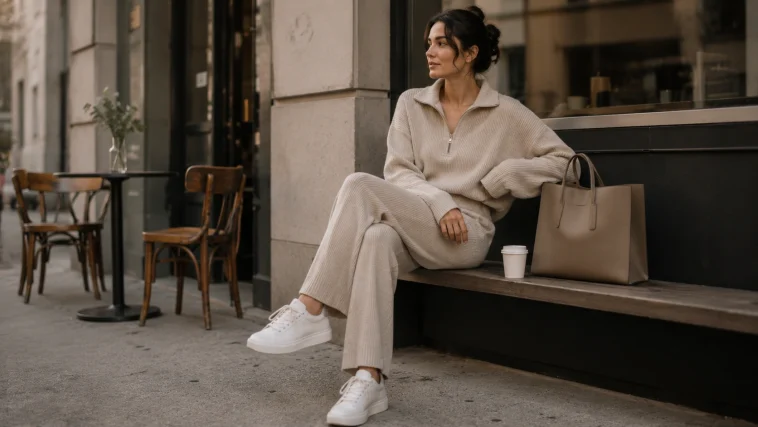
Loungewear is comfortable clothing like joggers, hoodies, and knit sets designed for both home and casual wear. Styling it well means balancing soft pieces with structure, using fitted layers and clean silhouettes so outfits look intentional, not careless, in everyday settings like errands, travel, or coffee shops.
There’s a fine line between looking relaxed and looking like you stopped trying. Loungewear lives right on that line.
The problem is not the clothes themselves. Most pieces are comfortable, modern, and easy to wear. The issue starts when everything in the outfit feels equally soft, equally loose, and equally unstructured. That’s usually when things start to look accidental instead of intentional.
Styling loungewear isn’t about dressing it up. It’s about giving it structure without killing comfort.
And that structure comes down to one thing: visual control.
That shift in how we even define everyday clothing didn’t happen randomly — it’s tied to how loungewear moved from homewear into a full lifestyle category in recent years.
(Read more about how that shift happened here → Why Loungewear Became Everyday Fashion)

How to Style Loungewear So It Looks Put Together
Most styling advice stops at “balance proportions” or “keep it simple.” That’s not wrong, but it doesn’t explain what’s actually happening visually.
A loungewear outfit only works when it has a clear hierarchy.
That hierarchy comes from three things:
- one anchor piece
- controlled contrast
- intentional weight distribution
If any of those are missing, the outfit starts to feel unfinished.
The Anchor Style Rule For Loungewear Outfit
Every loungewear outfit needs one visual anchor. This is the piece that tells the eye where to focus first.
It could be:
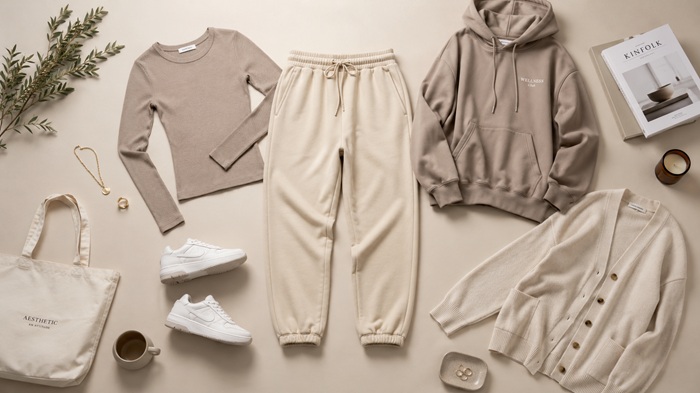
- structured joggers
- a matching knit set
- a fitted ribbed top
- an oversized sweatshirt with shape
But here’s where most people go wrong:
Diagnostic Check
If your outfit feels off, it’s usually because:
- No anchor exists → everything blends
- Two anchors exist → top and bottom compete
- Anchor is too weak → outfit collapses into softness
Fix
Strengthen one element. Let everything else support it.
Example:
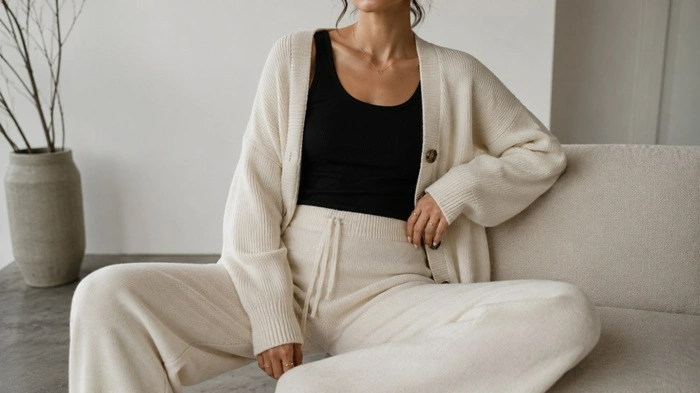
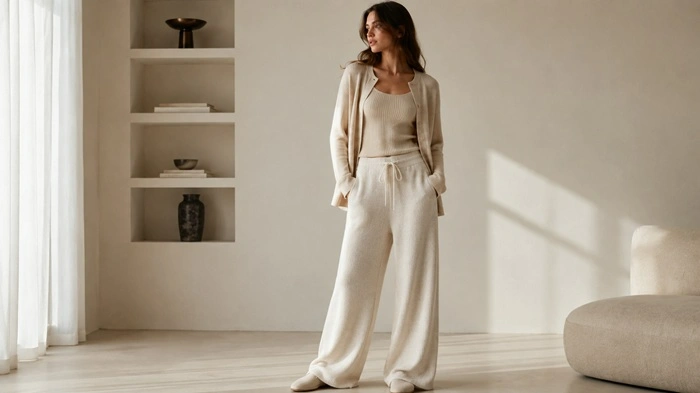
Cream wide-leg knit pants + fitted black tank + neutral cardigan
The fitted top becomes the anchor. Everything else builds around it.
Without that contrast, the outfit would turn into one continuous soft silhouette with no structure.
Everyday Errands: The “I Just Stepped Out” Look
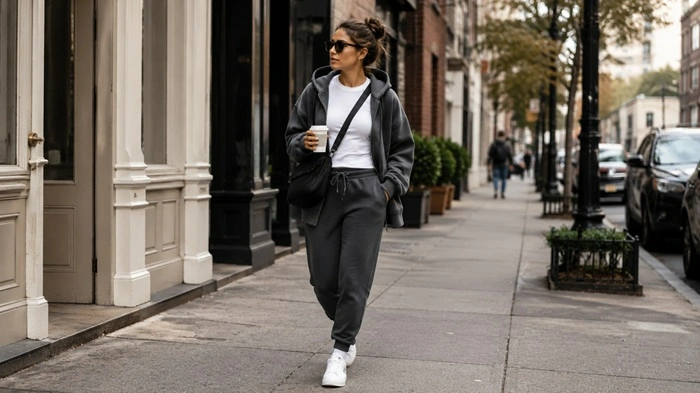
This is where loungewear either looks effortless or careless.
Base Outfit Formula
- Charcoal joggers (tapered ankle)
- White fitted tee
- Oversized hoodie (lightweight, not bulky)
- Clean sneakers
- Crossbody bag
This works because nothing competes for attention. Everything is low contrast but controlled.
Why It Works
There is a clear hierarchy:
- Joggers define structure
- Tee adds clarity
- Hoodie adds volume (but controlled)
Where It Breaks
If the outfit feels wrong in this category, it usually comes from:
- too much volume everywhere (no silhouette control)
- faded fabrics (visual fatigue instantly shows)
- heavy gym-style sneakers (too aggressive for soft base)
Quick Fix
Reduce bulk in at least one area:
- either top
- or bottom
- or footwear
Never all three at once.

Coffee Shop: Soft but Intentional
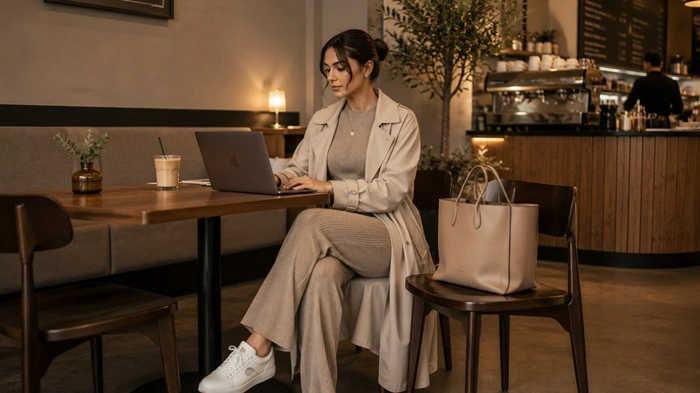
This is the most sensitive category because people see you here longer. The outfit has time to be “read.”
Base Outfit Formula
- matching ribbed knit set (top + straight-leg pants)
- structured tote bag
- light cardigan or trench
- neutral sneakers or slip-ons
- minimal accessories
Why It Works
Matching tones reduces visual noise. The outfit feels unified even though it’s soft.
This is where coordination replaces structure.
Diagnostic Check
If this outfit feels off:
- it looks too pajama-like → fabric too soft + no outer layer
- it looks too flat → no texture variation
- it looks too casual → footwear too relaxed
Fix
Add one layer of structure:
- trench coat
- buttoned cardigan
- slightly heavier bag silhouette
That’s usually enough.
Travel Outfit: Built for Movement
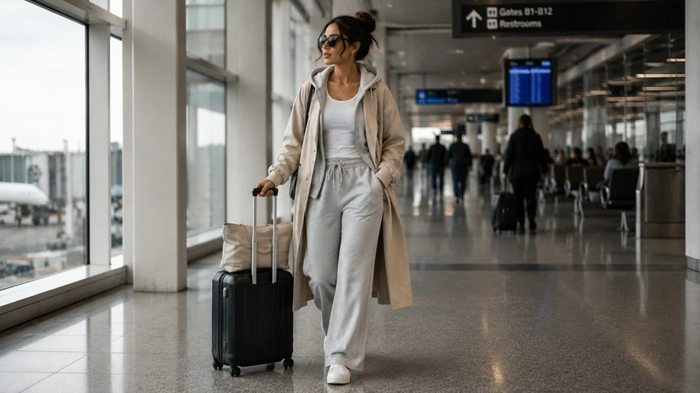
Travel exposes every weakness in clothing design.
Base Outfit Formula
- soft joggers or wide-leg knit pants
- breathable cotton or modal top
- zip hoodie or cardigan
- light coat if needed
- slip-on sneakers
- optional scarf
Why It Works
Travel outfit isn’t about style first. It’s about:
- sitting comfort
- temperature shifts
- movement flexibility
Diagnostic Check
If travel outfits feel wrong, it’s usually because:
- Fabrics wrinkle too easily
- The outfit has no layering system
- Shoes are too heavy or rigid
Fix
Think in layers, not pieces:
- base layer (comfort)
- mid layer (adjustment)
- outer layer (temperature control)
If one layer is missing, the outfit stops functioning properly.
Weekend Casual: Relaxed but Styled
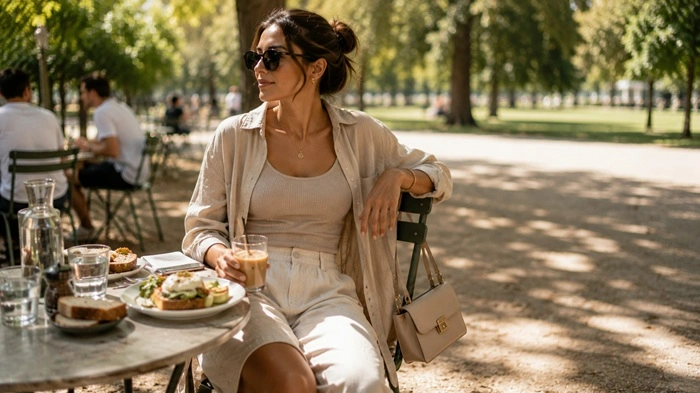
This is where loungewear becomes visible fashion, not just comfort wear.
Base Outfit Formula
- beige knit shorts or relaxed trousers
- ribbed fitted tank
- open linen shirt
- slides or low-profile sneakers
- structured sunglasses or a small bag
Why It Works
The open shirt creates vertical structure. Without it, the outfit would sit too flat and too relaxed.
Diagnostic Check
If this looks off:
- too beach-like → missing footwear structure
- too flat → no layering
- too soft → no contrast between top and bottom
Fix
Always add one “hard edge”:
- structured bag
- defined shoe shape
- or open layering piece
Common Styling Breakdowns: Why Loungewear Fails
Most styling mistakes are not about taste. They are about structure collapse.
1. Everything Is the Same Weight
Soft top + soft bottom + soft shoes = no visual hierarchy.
Fix
Introduce contrast:
- fitted top OR structured bottom OR defined shoe
2. No Silhouette Control
Oversized everything removes shape completely.
Fix
Always balance:
- loose + fitted
- wide + narrow
- soft + structured
3. Wrong Fabric Language
Not all fabrics belong together visually.
Fix
Avoid mixing:
- heavy fleece + silky fabrics
- gym compression + soft knits (without structure)
4. Footwear Disconnect
Shoes can break the entire outfit instantly.
Fix
Match shoe weight to outfit tone:
- soft outfit → minimal sneakers or clean slides
- structured outfit → slightly heavier sneaker allowed
Building a Functional Loungewear Wardrobe
What this actually shows
Instead of thinking:
“I have 7 items in my wardrobe”
You start thinking:
“Each item creates 2–4 usable outfits depending on pairing”
That’s the shift from clothing ownership → styling system thinking.
Example Outfit Combinations From the Matrix
1. Minimal Errand Look
- Neutral joggers
- Fitted ribbed top
- Oversized hoodie
- Clean sneakers
Simple layering. Controlled volume.
2. Coffee Shop Ready
- Matching knit set
- Lightweight layering piece
- Clean sneakers
- Minimal bag
Soft but structured through layering.
3. Elevated Casual Look
- Wide-leg trousers
- Fitted ribbed top
- Oversized hoodie or cardigan
- Clean sneakers
Balanced silhouette contrast.
4. Travel Mode Outfit
- Joggers
- Ribbed top
- Hoodie
- Layering piece tied or removed depending on temperature
- Sneakers
Function-first layering stack.
System Rule
Instead of just:
“Every piece should connect to two others”
Use this clearer rule:
Every item must do at least one of these jobs:
- balance volume (fitted vs loose)
- add structure (layering piece)
- increase flexibility (works in multiple settings)
- stabilise outfit (neutral base like sneakers or joggers)
If a piece does not perform a role, it becomes a wardrobe dead-end.
The Real Principle Behind Everything
Loungewear doesn’t fail because it’s too casual. It fails when there’s no visual direction holding the outfit together.
How to style loungewear today comes down to choosing the right pieces and combining them with intention. When the proportions and textures work together, the outfit feels naturally balanced instead of random or thrown on. Most styling issues actually come from a lack of visual hierarchy in what the eye reads first.
It starts to fall apart when:
- Nothing in the outfit leads visually
- Every piece carries the same weight
- The silhouette feels flat or unresolved
In those cases, even good pieces stop working together, and the outfit begins to feel accidental rather than styled.
It works when the opposite is true:
- One element naturally leads the eye
- Everything else plays a supporting role
- Visual weight is balanced and intentional across the silhouette
That’s the difference between something that feels thrown on and something that feels considered.
Not dressing up. Not over-styling. Just controlled simplicity that knows where to stop.
Final Takeaway
Styling loungewear isn’t about adding more effort or layering on complexity. It’s about deciding what deserves attention in the outfit and what should quietly support it.
Once that hierarchy becomes clear, even the simplest combinations start to look deliberate. The clothes don’t change. The way they’re read does.
And that’s usually the point where comfort stops looking like a fallback and starts looking intentional in everyday spaces.
Sources
- McKinsey & Company – State of Fashion Reports
- Statista – Apparel, work, and consumer behavior datasets
- Harvard Business Review – Hybrid work and workplace behavior research
- Shop Peers — How to Look Stylish in Loungewear
- Vogue – Fashion styling and trend reporting
- Who What Wear – Everyday styling and outfit analysis
Loungewear Styling FAQs
What is loungewear in fashion?
Loungewear refers to comfortable clothing designed for relaxed wear at home and casual outings. It includes items like joggers, knit sets, oversized hoodies, ribbed tops, and soft trousers. Modern loungewear is designed to move easily between indoor comfort and outdoor styling without looking like sleepwear.
How do you style loungewear without looking sloppy?
The key to styling loungewear is balance. Pair relaxed pieces with structured items such as fitted tops, clean sneakers, or layering jackets. Avoid wearing oversized pieces on both top and bottom at the same time, and keep colors coordinated to create a more intentional silhouette.
Can loungewear be worn outside?
Yes, modern loungewear is designed for both indoor and outdoor use. Many brands now create “day-to-night” or “studio-to-street” pieces that work for errands, travel, coffee shops, and casual meetings. The styling determines whether it looks polished or too relaxed in public spaces.
What is the difference between loungewear and athleisure?
Loungewear focuses on comfort and relaxed styling for everyday wear, while athleisure is more performance-based and inspired by activewear. Athleisure often includes workout fabrics like compression leggings, while loungewear uses softer materials like cotton, knit, and modal blends.
Why does loungewear sometimes look unpolished?
Loungewear can look unpolished when there is no visual structure in the outfit. This usually happens when everything is oversized, fabrics are too soft without contrast, or footwear feels disconnected from the rest of the outfit. Adding balance through fitted pieces and layering helps fix this.
What makes a loungewear outfit look intentional?
A loungewear outfit looks intentional when it has a clear visual hierarchy. This means one piece leads the outfit, while others support it through contrast in shape, texture, or fit. Coordinated colors, clean sneakers, and balanced proportions also help create a more styled appearance.
Can loungewear be part of a capsule wardrobe?
Yes, loungewear fits well into a capsule wardrobe because it is versatile and easy to mix across outfits. Neutral joggers, knit sets, and basic tops can be combined in multiple ways, making them ideal for creating a small but functional everyday wardrobe.