 Krist S
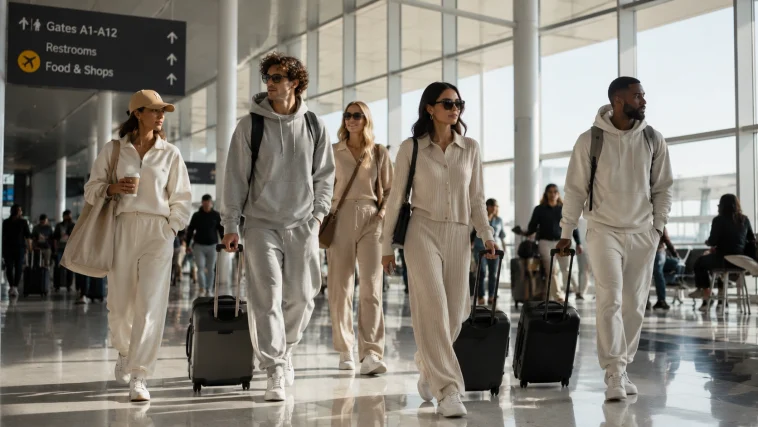
Loungewear is comfortable clothing designed to bridge sleepwear and everyday wear, made from soft fabrics like cotton and knits. It has grown in popularity due to hybrid work, flexible lifestyles, and travel needs, allowing people to move between home, errands, and casual settings without changing outfits.
Walk through any major airport today, and the change is obvious before you even reach the gates. Matching knit sets, oversized hoodies, soft wide-leg trousers, and clean sneakers have replaced the old “travel uniform” of structured outfits and stiff denim. Not sloppy, but not overly formal either. Something in between.
That shift wasn’t random. It came from a slow restructuring of daily life. Remote work, hybrid schedules, and looser office expectations changed how people think about clothing entirely. Retailers adapted quickly. Brands that once separated homewear from “real clothes” started designing entire collections around day-to-day movement — commuting, working from cafés, video calls, errands, and travel all folded into one category of dressing.
At the same time, there’s a tension underneath it. Some stylists argue that modern comfort dressing blurred the line between polished and careless, especially as ultra-casual outfits became normal in spaces that used to expect structure. Still, consumers continue to buy loungewear at scale because it matches how life actually functions now — fragmented, flexible, and constantly shifting between environments.
That’s where modern loungewear sits today. Not at home. Not fully outside. But in the gap between both.

What Counts as Loungewear Today?
This is where things stop being cleanly defined.
Most people still mix up loungewear, athleisure, sleepwear, and activewear. Fashion brands don’t help either, because those categories have started overlapping on purpose.
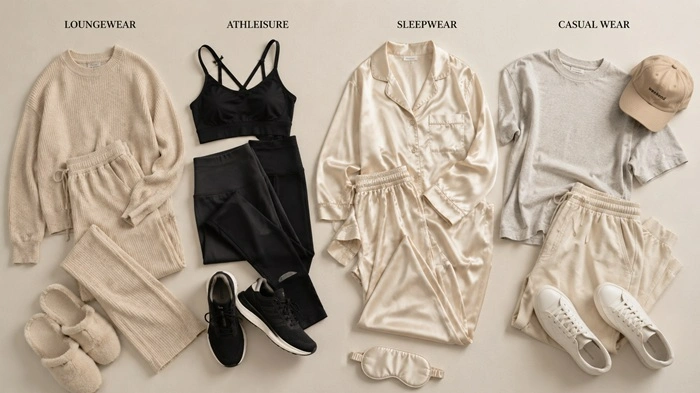
A hoodie and sweatpants used to signal downtime or staying indoors. Now the same outfit can be styled with a structured coat, minimal sneakers, and a leather tote, and suddenly it reads as intentional enough for a café, coworking space, or casual meeting.
Modern loungewear sits between sleepwear and streetwear, but it’s no longer defined by a fixed environment. It’s defined by flexibility.
Here’s how the categories generally split:
Sleepwear stays tied to rest and indoor use.
Athleisure comes from performance and movement-based clothing.
Loungewear focuses on softness, ease, and adaptability without being performance-driven.
The overlap matters because brands stopped designing clothing around where it’s worn. Instead, they design it around how long it can stay relevant across different parts of a day.
A ribbed knit set today might be marketed as:
- work-from-home wear
- travel outfit
- airport style
- weekend casual
- everyday basics
All at once.
That shift reflects something bigger. People stopped building wardrobes around single-use outfits and started prioritizing clothing that can move between contexts without effort.
Retailers responded by expanding labels like:
- Day-to-night comfortwear
- Elevated basics
- Soft tailoring
- Lifestyle essentials
Loungewear stopped being a “home category” and became a transition category.
Even capsule wardrobe thinking pushed it further. Fewer pieces, more combinations, less separation between “home” and “out.”
At the same time, aesthetics shifted. Comfort-core and quiet luxury trends replaced loud prints and obvious branding with softer tones, cleaner shapes, and more fabric-focused design. Neutral palettes like beige, grey, charcoal, and muted green became dominant not just because they’re trendy, but because they integrate easily into multiple outfits.
Today’s loungewear often includes:
wide-leg knit pants, coordinated cotton sets, structured joggers, oversized crewnecks, ribbed tanks, lightweight cardigans, soft tailored trousers, and relaxed knit dresses.
The details matter. A matching set in dense cotton or modal feels very different from old gym sweats that have lost shape over time.
Brands understand this now. Many actively design loungewear to work across social media visuals, travel scenarios, and everyday public life. Comfort started the category, but versatility and presentation sustained it.
Why Loungewear Became a Permanent Fashion Category
At one point, it looked like loungewear would fade once lockdowns ended and offices reopened.
That didn’t happen.
Instead, it became one of the most stable growth areas in modern apparel. Industry estimates place the global loungewear market at over $6 billion in 2026, with continued growth expected over the next decade. More importantly, the demand isn’t limited to home use anymore. It has shifted toward multifunctional wear.
Surveys in apparel consumption consistently show that a large share of consumers now prefer clothing that works across multiple settings rather than serving a single purpose. Ownership of multiple loungewear sets has also become common, signaling that it is no longer an occasional category but part of core wardrobes.
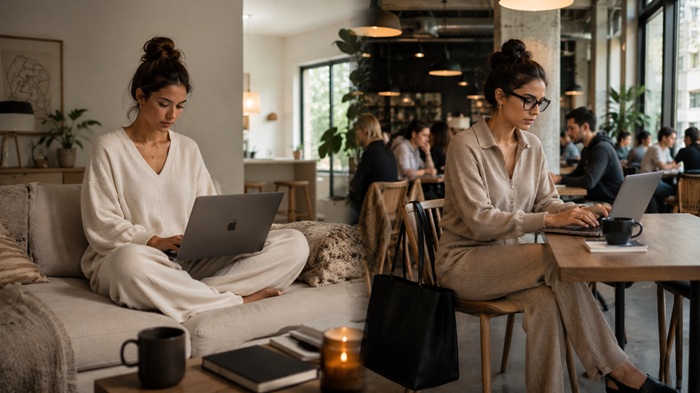
The real driver is behavioral. Hybrid work didn’t just move people home. It fragmented their routines.
A typical week now includes combinations of:
home work sessions, coworking spaces, cafés, office days, errands, and travel.
Clothing that only fits one of those environments quickly becomes impractical.
That’s why brands began blending categories that used to be separate. Activewear, homewear, and casual basics merged into one flexible system. Soft joggers, elevated hoodies, knit sets, and stretch fabrics became standard retail items instead of niche comfortwear.
Brands like Vuori show this clearly, positioning their clothing as lifestyle wear rather than athletic-only gear, reflecting how far the category has expanded beyond its original purpose.
But the shift isn’t one-directional.
There’s also a visible return of structure in some workplaces. Tailored trousers, blazers, and sharper silhouettes are making a comeback in certain industries. It’s not a full reversal, but more of a correction after years of extreme casual wear.
This creates tension in how people dress today. Comfort is expected by individuals. A polished presentation is still expected by many workplaces. Clothing now has to satisfy both.
Modern loungewear fits that gap. It softens structure without removing it entirely. It doesn’t reject formality. It loosens it.
That adaptability is what made it permanent.

Comfort That Doesn’t Look Careless
There’s a narrow space between looking relaxed and looking unconsidered. Loungewear sits right in that space, and styling determines which side it lands on.
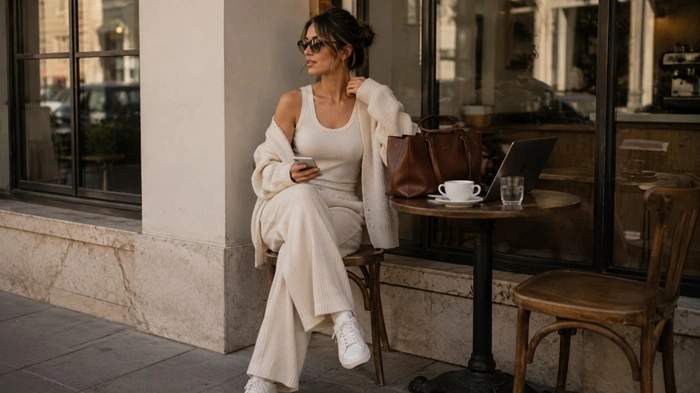
The same hoodie and joggers can look like sleepwear or a deliberate outfit depending on proportion, tone, and coordination.
For example:
>Cream wide-leg knit pants paired with a fitted black ribbed tank and an oversized oatmeal cardigan, finished with clean sneakers and a structured tote, reads intentional without being formal. It works in cafés, casual meetings, or coworking spaces without feeling out of place.
Swap one layer, a bomber instead of a cardigan, and the tone shifts toward streetwear. Change footwear to slides, and it becomes weekend casual. The base remains the same, but perception changes through structure.
Another common real-world combination:
Charcoal joggers with a matching relaxed sweatshirt layered over a white fitted tee, paired with neutral sneakers and a crossbody bag. It’s simple, but visually coordinated enough to feel deliberate.
Even warm-weather versions follow the same logic:
Soft beige lounge shorts, ribbed tank, and an open linen shirt with minimal sneakers or slides. The open layer adds structure without complexity.
None of these outfits relies on more clothing. They rely on balance.
Why Coordinated Outfits Feel More Put-Together
There’s a reason these combinations work even when they’re simple.
The brain reads consistency as intention.
When colors, proportions, and textures align, the outfit feels like it was considered, even if it wasn’t. That perception changes how polished it appears.
Monochrome dressing is especially effective because it reduces visual noise. The eye processes it faster and interprets it as more refined.
In visual psychology, this is often linked to perceptual closure. When patterns or consistency appear, the mind naturally completes them into something structured.
On the other hand, inconsistency signals randomness. Mixed tones, conflicting silhouettes, or overly unbalanced proportions can make an outfit feel unplanned, even if the pieces are expensive.
That’s why small decisions matter:
matching tones, balancing volume, keeping footwear minimal, repeating textures, and avoiding unnecessary visual clutter.
It’s not about dressing formally. It’s about creating enough internal order that the outfit feels intentional rather than accidental.
That’s the real shift in how loungewear functions now. It’s no longer just comfort clothing. It’s structured ease.
Why People Keep Reaching for Loungewear
At some point, clothing stops being about style and starts becoming about reducing friction in daily life. That’s where loungewear fits.
It simplifies getting dressed in a way that matches how people actually live now.
A. Comfort Dressing and Mental Ease
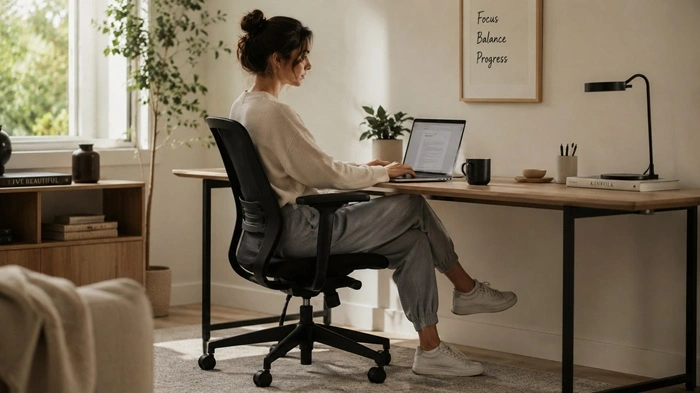
Physical comfort is still the starting point, but the real reason people return to loungewear is sensory relief.
Long screen hours, commuting fatigue, and constant movement between environments create a background level of discomfort people don’t always notice until it’s removed.
Soft fabrics like cotton blends, modal, and lightweight knits reduce that physical resistance. Clothing becomes less of a factor in attention, which changes how the day feels.
There’s also a psychological effect. Softer clothing is associated with downtime, which subtly reduces mental pressure. It doesn’t make people less productive. It just removes unnecessary friction.
B. Hybrid Lifestyles Changed Clothing Expectations
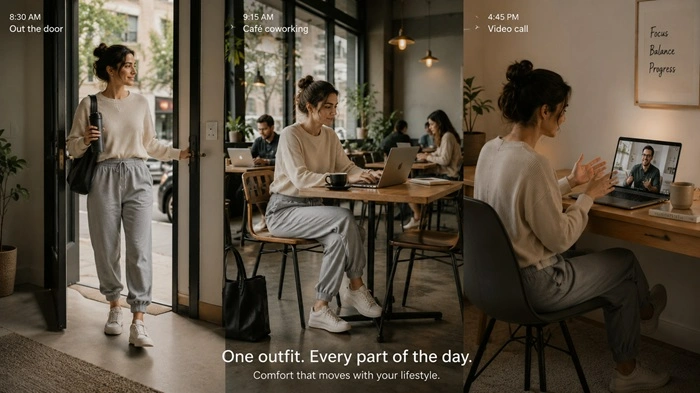
Daily routines are no longer fixed.
A single day might include home working, café sessions, office time, errands, and calls on the move. Clothing has to function across all of it.
That expectation pushed loungewear into the center of everyday wardrobes. It reduces the need to change outfits multiple times a day.
Retail language reflects this shift: “all-day wear,” “studio-to-street,” and “lifestyle essentials” all describe the same idea — clothing that doesn’t need to reset when the environment changes.
C. Travel and Mobility
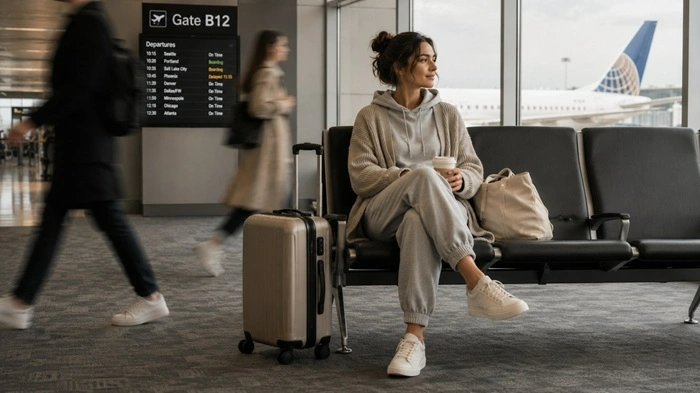
Travel exposes clothing limitations quickly.
Long periods of sitting, temperature changes, and constant movement make structured outfits uncomfortable. Loungewear solves that through flexibility.
Soft joggers, stretch fabrics, and layered knits allow movement without restriction. They also handle temperature variation better, especially in airports and transit environments.
Layering is key. Lightweight pieces can be added or removed without disrupting the outfit.
Wrinkle resistance adds another advantage. Many modern pieces hold their shape even after long wear or packing, making them practical for frequent travel.
That’s why loungewear has quietly become a default travel uniform. Not for style reasons, but for practicality.
Remote Work Didn’t Disappear. It Just Changed Shape.
Remote work didn’t remain fully remote. It fragmented into hybrid schedules, flexible office setups, and mixed-location work habits.
People now move between home offices, coworking spaces, cafés, and traditional offices depending on the day. That creates a clothing problem: outfits need to work across all of those environments without looking out of place in any of them.
Loungewear fits that requirement. It works in video calls, public spaces, and casual meetings without needing adjustment.
Coworking culture and mobile work setups have reinforced this trend, while digital nomad influence has pushed brands to think more about travel-ready clothing that adapts across climates and contexts.
At the same time, workplace expectations are shifting back in the opposite direction in some industries. There’s a gradual return of structured dressing in certain environments, creating tension between personal comfort and professional presentation.
Modern loungewear exists inside that tension. It softens structure without removing it entirely.
Quiet Luxury and Why Loungewear Started Looking Expensive
At some point, fashion shifted toward looking expensive without appearing dressed up. That’s where quiet luxury entered the conversation.
Neutral tones became dominant not only because they look clean, but because they photograph well and blend into curated visual spaces online. Beige, cream, grey, and muted black became everyday staples.
At the same time, logo fatigue set in. As branding became louder and more repetitive across fast fashion cycles, many people started gravitating toward understated clothing that didn’t rely on visible labels.
Loungewear absorbed that shift naturally.
Matching sets, minimal stitching, muted palettes, and clean silhouettes started carrying the visual language of quiet luxury. On the surface, it looks simple. That simplicity is what made it desirable.
But it raises a real question.
Is quiet luxury actually a move toward better design and longer-lasting clothing? Or is it just a more subtle way to package aspiration?
Because in many cases, the difference between basic and premium loungewear isn’t always visible in design alone. It often comes down to fabric quality, branding, and positioning rather than obvious structural differences.
That tension sits at the core of modern loungewear. It is both practical clothing and a cultural signal at the same time.
Loungewear Isn’t Just a Trend Anymore
Loungewear didn’t replace formalwear, and it didn’t erase the idea of dressing well. What it did was expose how blurred daily life has become. Work, travel, downtime, and social plans now overlap in ways that make rigid clothing systems feel out of sync with reality.
That’s the first half of the story — why it happened. The shift in work culture, the rise of hybrid routines, changing retail categories, and the quiet move toward more minimal aesthetics all explain why loungewear stopped being temporary and became part of everyday fashion.
But the second half is just as important: how it actually looks when people wear it.
Because loungewear only works in practice when it’s styled with intention. The difference between looking relaxed and looking careless comes down to small decisions — proportions, color coordination, layering, and visual balance. That’s where it moves from cultural trend into something more personal and practical.
Put together, both sides explain the same reality from different angles. One explains the system behind the shift. The other shows how it plays out in real life, in airports, cafés, coworking spaces, and everyday routines where clothing has to keep up without slowing anything down.
What’s left now isn’t a question of whether loungewear belongs in modern wardrobes. It already does. The real question is how people choose to shape it so it fits their version of everyday life without losing structure or intention along the way.
Understanding why loungewear became normal helps, but how you wear it decides whether it blends into your day or defines it. Both matter more than the trend itself.
Frequently Asked Questions About Loungewear
What is considered loungewear?
Loungewear includes comfortable clothing designed for both home and casual public settings. It typically features soft fabrics like cotton, jersey, and knits, and includes items such as joggers, knit sets, relaxed trousers, hoodies, and oversized tops that balance comfort with everyday wearability.
Is loungewear the same as athleisure?
No. Loungewear is focused on comfort and relaxed styling for general daily use, while athleisure is designed with performance and movement in mind, often inspired by workout clothing. Loungewear is softer and less technical, while athleisure is more structured for physical activity.
Why has loungewear become so popular?
Loungewear became popular due to hybrid work, flexible lifestyles, and increased time spent moving between home, work, and social environments. People now prefer clothing that works across multiple settings without needing frequent outfit changes, making comfort-focused fashion more practical.
Can loungewear be worn outside the house?
Yes. Modern loungewear is designed for versatility. Many pieces are styled for errands, travel, cafés, coworking spaces, and casual outings. When paired with structured accessories or clean footwear, it easily transitions from homewear to streetwear.
What is the difference between sleepwear and loungewear?
Sleepwear is intended strictly for sleeping and staying indoors, usually prioritizing softness and rest. Loungewear, on the other hand, is designed to be worn both indoors and outdoors, offering more structure and styling flexibility while still remaining comfortable.
Is loungewear still trending in 2026?
Yes. Loungewear remains a strong category in 2026 due to continued hybrid work patterns, travel-friendly fashion needs, and the rise of minimalist and comfort-focused style trends like quiet luxury and capsule wardrobes.
How do you style loungewear to look put-together?
Loungewear looks more polished when outfits are coordinated in tone, fit, and texture. Matching sets, neutral colors, clean sneakers, and structured layers like cardigans or coats help create a balanced and intentional appearance.